For a family of four, how often to pump septic tank family of 4 homes depends on tank size, water use, and waste habits. Many homes need regular septic pumping, but no single schedule fits every property. Records, inspections, and warning signs help Dallas homeowners choose the right time for service.
Table of Contents
- How often should a family of four pump a septic tank?
- Can homeowners handle septic tank maintenance themselves?
- What should you do before scheduling septic tank pumping?
- What happens during a septic tank pumping appointment?
- What can go wrong when a septic tank is not pumped on time?
- When should you call a septic tank pumping professional?
- How can a family of four maintain a septic system between pump-outs?
- Key takeaways
- Frequently Asked Questions
- Conclusion
How often should a family of four pump a septic tank?
A family of four should set a pumping plan based on tank size, water use, and waste. Household size gives you a starting point, but it does not give every home the same answer. A smaller tank may need service sooner than a larger tank used by the same number of people.
A septic tank is a buried container that holds household wastewater. Solids settle at the bottom, while liquid moves toward the drainfield. The drainfield is the soil area that treats the liquid waste. As time passes, solid waste forms sludge, and lighter waste forms a top layer called scum. Pumping removes these layers before they block normal flow.
What determines the right pumping schedule?
Several details affect the right schedule:
- The size and design of the tank
- The number of people using the system
- Daily water use and laundry habits
- The amount of grease, solids, and waste entering the tank
- The age and condition of the septic system
- Whether the home has a garbage disposal
A family that uses more water may need service sooner. Long showers, many laundry loads, and leaking fixtures add water to the tank. A garbage disposal can also send more solids into the system.
The age and condition of the system matter too. Older tanks may have worn parts or damaged lids. A past inspection may also show a need for closer checks. If you are not sure how to find the tank records, check home documents or ask a septic professional for help.
How household habits affect septic tank frequency
Good habits can help extend the time between pump-outs. They cannot replace regular pumping. Spread laundry across the week, fix dripping fixtures, and avoid flushing wipes, paper towels, grease, or harsh chemicals.
Septic Tank Service Dallas can help Dallas homeowners review service records and plan care. The plan should match the tank, the home, and the family’s habits. Update it when the household grows or water use changes.
Can homeowners handle septic tank maintenance themselves?
Homeowners can handle simple checks and daily care. Septic tank inspection and pumping are not safe do-it-yourself jobs. A property owner can watch for leaks, protect the drainfield, and keep service records. A trained worker should open the tank, check sludge, pump waste, and test system parts.
Routine tasks property owners can manage
Most homeowners can safely handle these tasks:
- Check toilets and faucets for leaks
- Keep cars and heavy equipment off the drainfield
- Keep deep-rooted trees away from pipes and tank areas
- Use water with care during busy laundry days
- Record pumping, repairs, and inspections
- Flush only human waste and toilet paper
A homeowner can also look for wet spots, odors, or very green grass near the tank. These checks do not require opening the tank. They help a family notice changes before a small issue becomes a larger one.
Homeowners do not need a professional for these simple checks. They should call one when they need to open the tank, measure waste, pump the system, or find the cause of a backup. Do not enter the tank under any condition.
Why tank inspection and pumping are not DIY jobs
A septic tank can contain harmful gases and unsafe wastewater. Opening a lid without proper training can cause serious injury. Pumping also needs special equipment and safe waste handling.
A professional can measure the sludge and scum layers. They can check the baffles, lids, tank walls, and pipes. Baffles are parts that help control how water enters and leaves the tank.
A septic system is more than a tank. It includes pipes, soil, vents, and a drainfield. A cesspool is not the same as a modern septic system. The system type matters when you plan care or consider septic tank replacement.
Septic Tank Service Dallas can explain the system on your property. The team can also help owners understand which tasks are safe at home and which need trained help.
What should you do before scheduling septic tank pumping?
Before you schedule service, gather your records and check the property for warning signs. This information helps the professional prepare for the visit. It can also show whether the home needs routine pumping or faster help.
Check household records and system details
Look for the tank installation record, past pumping receipts, inspection reports, and repair papers. Note the tank material, size, location, and age if you know them. Concrete and plastic tanks may have different access points and inspection needs.
You may not know how deep the tank is buried. Depth can vary with soil, grading, tank design, and landscaping. Do not dig at random or dig near utility lines. Records and professional locating tools are safer ways to find it.
Write down recent changes as well. New residents, an added bathroom, a garbage disposal, or frequent guests can change the system’s workload. Sharing these facts gives the professional a clearer view of the problem.
Look for warning signs around the property
Before booking, check for slow drains, sewage odors, gurgling toilets, wet ground, or wastewater near the drainfield. Look for grass that stays unusually green over one area. These signs may point to a full tank, blocked pipe, or drainfield concern.
Do not wait for every fixture to stop working. A system can show early signs before a backup. Keep people and pets away from sewage. Avoid walking over soft or wet ground, and take notes instead of opening the tank.
What happens during a septic tank pumping appointment?
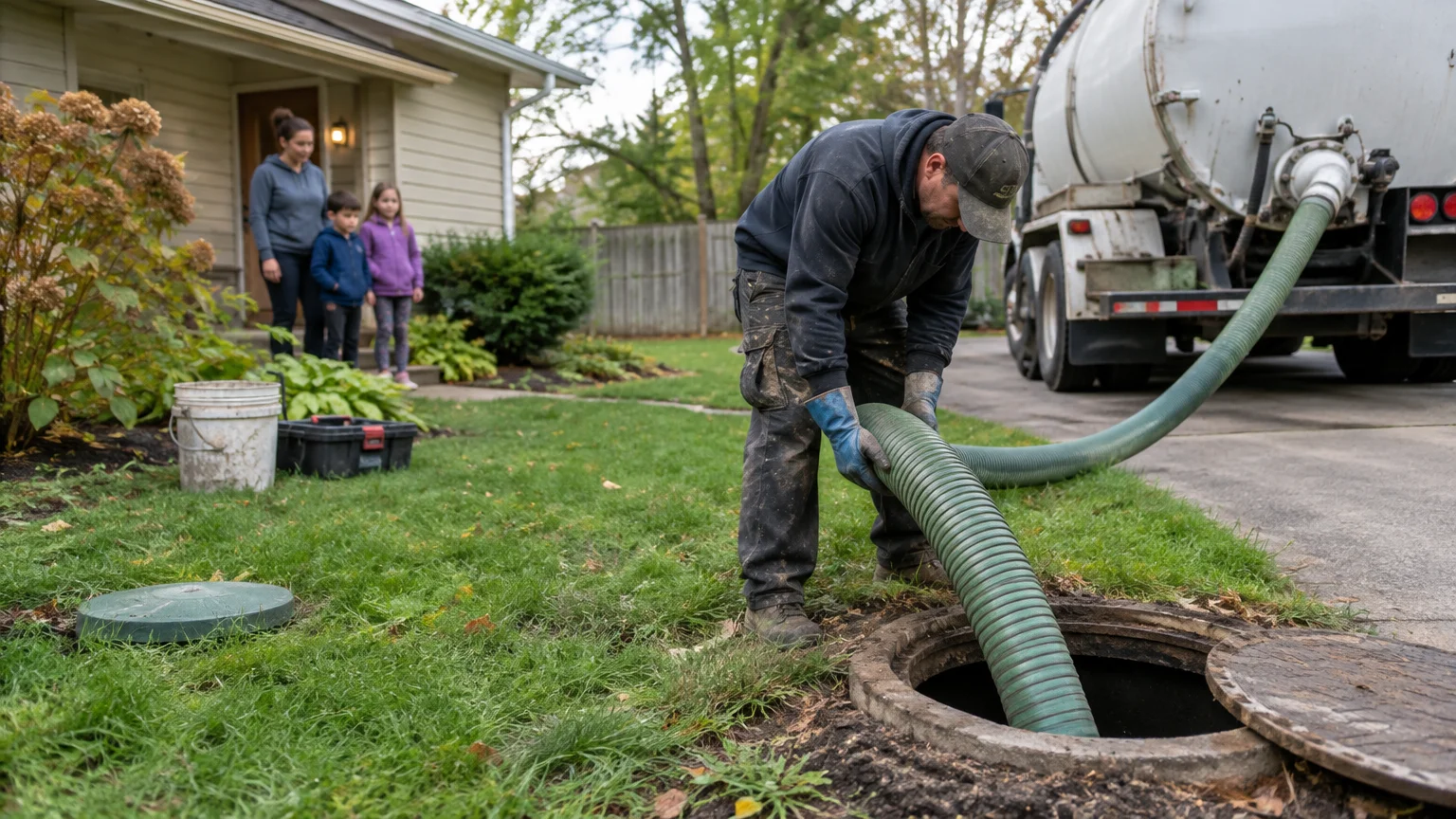
During a septic tank pumping appointment, a professional locates the tank and opens the access points safely. The worker removes settled waste and checks key parts of the system. The process depends on tank location, access, condition, and site layout.
How the tank is located and accessed
The professional may review records, use a probe, or use another locating tool. They may also trace plumbing from the home. Once the tank is found, the access lids are uncovered as needed.
Keep vehicles, outdoor furniture, and other items away from the work area. The tank should never be entered. Septic gases can be dangerous even when the tank looks clean or empty. Children and pets should stay away during the visit.
What professionals inspect while pumping
Pumping removes the sludge and scum layers from the tank. The worker may inspect the inlet and outlet baffles, tank walls, lids, and visible pipes. They may also note damage, heavy buildup, or signs that wastewater is not leaving correctly.
Pumping does not repair every problem. A blocked line, damaged baffle, broken lid, or failing drainfield may need separate work. Ask what the professional found, and keep the service record for future visits.
That record helps Septic Tank Service Dallas and the property owner plan future septic pumping. It also helps show whether the system is changing over time.
What can go wrong when a septic tank is not pumped on time?
When a septic tank is not pumped on time, solids may move toward the drainfield. This can limit wastewater flow and harm the soil treatment area. The result may be slow drains, odors, wet soil, backups, or damage to the system.
Delayed care can turn a manageable service need into a larger concern. It may also make it harder to tell whether the problem is the tank, the pipes, or the drainfield.
Common signs of an overloaded or failing system
Property owners should watch for these signs:
- Toilets flush slowly or gurgle
- Several drains become slow at once
- Sewage odors appear inside or outside
- Wastewater collects near the tank or drainfield
- Grass grows thick and bright over one area
- Sewage backs up into a shower or floor drain
One sign does not prove the cause. A blocked household drain can look like a septic problem. Still, several signs together need prompt attention. Limit water use and keep people away from sewage until the cause is known.
How delayed maintenance can affect the drainfield
The drainfield needs open spaces in the soil. These spaces receive and treat liquid wastewater. Extra solids can clog the area and make it harder for water to move through the soil.
Once the drainfield is harmed, pumping alone may not solve the problem. Repairs may need soil work, pipe work, or a larger system review. The next step depends on the system, site, access, and damage found.
A failing septic system can affect soil, landscaping, and nearby water. Local rules may apply to repairs, replacement, or discharge. Ask a professional to explain the findings before making a plan. The final cost is confirmed on a quote after the needed work is known.
When should you call a septic tank pumping professional?
Call a septic tank pumping professional when the pumping record is missing, the tank may be full, or warning signs appear. Prompt help is especially important when sewage backs up or wastewater reaches the ground. Waiting for complete failure can put the home and drainfield at greater risk.
Situations that need prompt service
Contact a professional when:
- The last pump-out date is unknown
- The tank has reached its planned service time
- Several drains slow down together
- Sewage odors continue after basic drain checks
- Wastewater appears near the tank or drainfield
- A toilet or drain backs up with sewage
- The property is being bought, sold, or rented
A first-time buyer should request septic records and an inspection before relying on the system. Investors and landlords should keep service papers with the property file. Tenants should report odors, backups, and wet ground to the owner quickly.
What information to share when requesting help
Share the property location, tank type if known, last service date, household size, recent symptoms, and access concerns. Also mention a garbage disposal, extra bathrooms, or recent plumbing changes.
Septic Tank Service Dallas serves property owners and can help sort routine care from urgent concerns. A clear description helps the service team plan the visit. Ask what the appointment includes, and have the final cost confirmed on a quote before work begins.
How can a family of four maintain a septic system between pump-outs?
A family of four can protect its septic system by using water wisely and limiting harmful waste. Keeping clear records also helps. These habits reduce stress on the tank and drainfield, but they do not replace inspections or scheduled pumping.
Water-use and waste-disposal habits that help
Repair leaks quickly, and avoid running several water-heavy appliances at once. Spread laundry across the week. Showers, baths, and dishwashing should not all happen during a short period when the system is already busy.
Only human waste and toilet paper belong in the toilet. Wipes, paper towels, feminine products, cotton swabs, cat litter, and medicines should go in the proper waste stream. Do not pour grease, paint, harsh chemicals, or large amounts of cleaner down household drains.
Keep the drainfield clear of sheds, pools, vehicles, and heavy traffic. Do not direct roof water or runoff from paved areas toward it. These simple choices help the soil receive wastewater as planned.
A practical maintenance record for homeowners
A simple record should list the tank location, size, material, pump-out dates, inspection notes, repairs, and changes in household use. Keep it with home papers, not only on a phone that may be replaced.
Review the record before moving into a home, renting it, or listing it for sale. If records are missing, a professional can help identify the tank and assess its condition. Septic Tank Service Dallas can help Dallas families make a clear care plan between pump-outs.
Key takeaways
- Pumping frequency depends on tank size, water use, and household waste.
- Homeowners can manage simple checks but should not open or pump a tank.
- Warning signs include odors, slow drains, wet soil, and sewage backups.
- Records help families plan service and explain changes in system use.
- Careful water and waste habits support the tank and drainfield.
Frequently Asked Questions
How often should a family of four pump its septic tank?
The schedule depends on tank size, water use, and the solids entering the tank. A family of four may need a different schedule than another family of the same size. Past pumping records and professional inspections give a better guide than household size alone.
How deep is a septic tank usually buried?
A septic tank may be buried at different depths. Soil, grading, tank design, and installation choices all affect depth. Do not dig randomly to find it. Records and professional locating tools are safer, especially near utility lines or landscaping.
What is a septic system?
A septic system treats household wastewater on the property. It usually includes a tank, pipes, and a drainfield. Solids settle in the tank, while liquid moves toward the drainfield for soil treatment. Each part affects the others, so the whole system needs care.
Can a homeowner inspect a septic tank alone?
A homeowner can check the yard, fixtures, odors, and service records without opening the tank. Tank access and inspection are not safe do-it-yourself tasks. Septic gases and wastewater can cause serious harm. A trained professional should inspect the tank and measure its contents.
What should a homeowner do during a septic backup?
Stop using water, keep people and pets away from sewage, and contact a septic professional. Do not open the tank or pour harsh chemicals into drains. Photos and notes about the backup can help explain the problem during the visit.
Conclusion
Knowing how often to pump septic tank family of 4 homes requires more than counting people. Tank size, water use, waste habits, system age, and past records all matter. Homeowners can handle basic care, but safe pumping and inspection need trained help.
Contact us to arrange septic tank pumping guidance for your property in Dallas.