A drain field is usually installed fairly close to the soil surface, but its depth changes with soil, groundwater, slope, system design, and local rules. The answer to how deep is a drain field comes from the approved plan or a careful site check. Every property has different ground conditions.
A drain field, also called a leach field or septic system drain field, receives wastewater after solids settle in the tank. The soil helps filter and treat that wastewater before it moves farther underground. Its location and depth matter because the field depends on the soil below it.
Homeowners often ask this question before landscaping, buying a property, repairing a septic system, or finding a buried drainfield. Records, surface clues, and professional locating can help. The safest choice is to avoid deep digging until the field location is known.
Table of Contents
- How deep is a drain field typically installed?
- What determines how deep a drain field should be?
- How does the drain field work below the soil surface?
- Can a drain field be too deep?
- How deep should drain field trenches be?
- How can you find the depth of an existing drain field?
- How do you locate the drain field on your property?
- How do slope and distance affect drain field placement?
- What problems can occur when a drain field is installed at the wrong depth?
- How should you verify a drain field’s depth and condition?
- Frequently Asked Questions
How deep is a drain field typically installed?
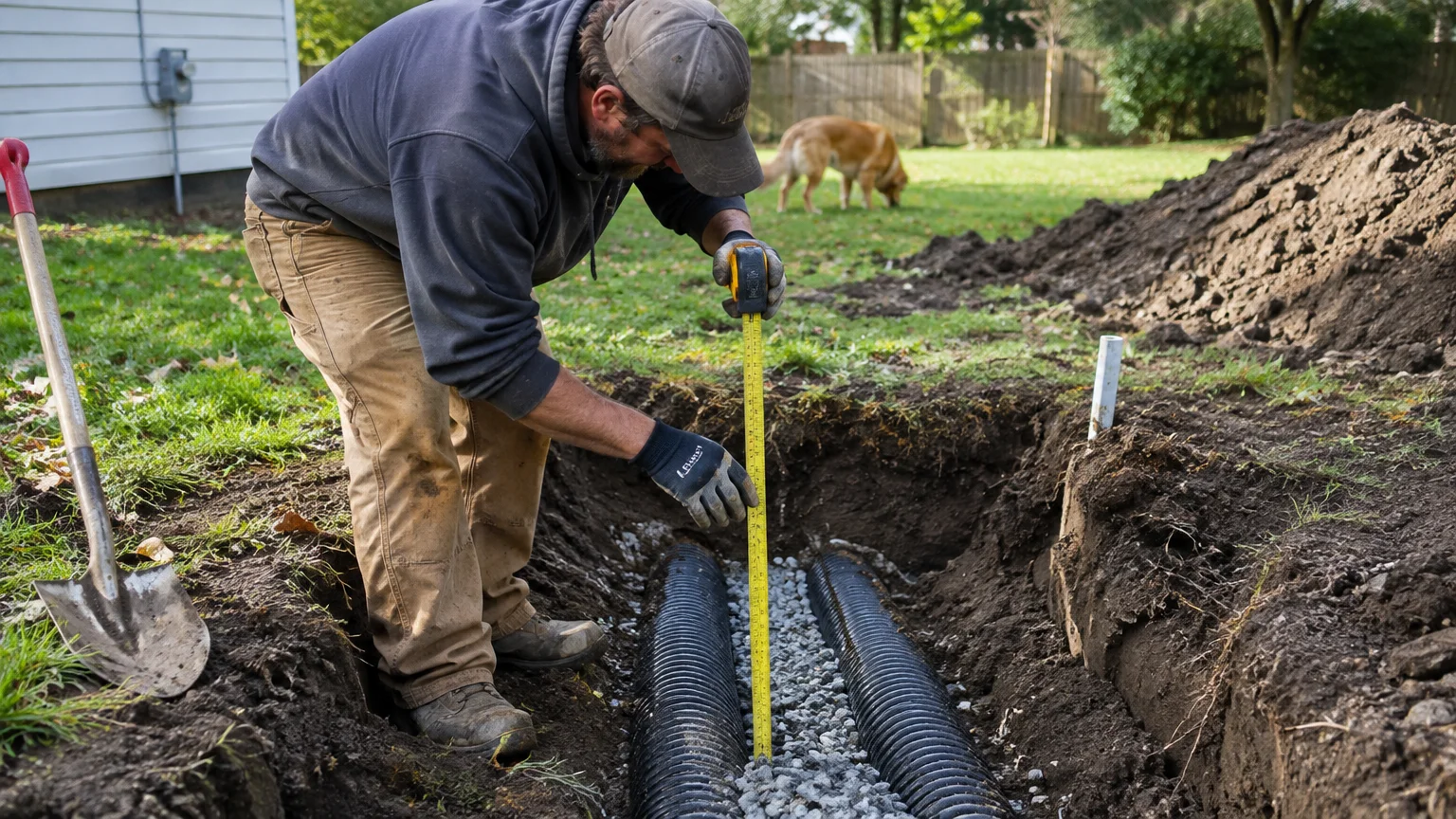
A drain field is often placed in a shallow soil layer. Still, there is no one depth for every property. The field must have enough suitable soil below it for wastewater treatment. It must also stay above groundwater, hard soil, or shallow rock.
The soil below the field matters more than one depth number. A shallow field can work well when the soil drains at the right rate. A deeper field may struggle if water reaches groundwater too soon or meets a tight soil layer.
Why the soil absorption area is usually shallow
The soil absorption area needs air, good soil structure, and room for wastewater to move. A shallow layout can help wastewater spread through the treatment layer. It can also make future checks and repairs easier.
The field may sit under grass, mulch, or a thin layer of topsoil. It should not be covered by a driveway, shed, pool, or heavy fill unless the approved design allows it. Added soil can change water flow and make the field too deep for its original plan.
A lawn may show only small clues. Some fields have slightly raised trenches. Others sit level with the yard. Green strips, soft soil, or early snow melt can point to buried pipes, but these signs do not prove the exact depth.
How drain field depth differs from septic tank depth
A septic tank is a sealed container where wastewater sits and solids settle. The drain field is a wider soil treatment area connected to the tank by an outlet pipe. The tank may be deeper for cover and support, while the field often uses shallow trenches or chambers.
Do not assume the drain field is beside or below the tank. The tank may sit near the home while the field reaches another part of the lot. The site plan is the best first way to understand this layout.
What determines how deep a drain field should be?
Soil and site conditions guide drain field depth more than the house does. Designers review soil texture, drainage, groundwater, rock, slope, wastewater flow, and the septic system type. Local rules then guide the final design.
The same house may need a different field on another lot. Sand, clay, silt, gravel, and mixed soils handle water in different ways. A field must fit the real soil, not a general rule found online.
Soil type, drainage, and seasonal groundwater
Soil type affects how quickly wastewater moves. Sandy soil may let water move fast. Clay soil may slow it down. Fast movement can limit treatment time, while slow movement can cause water to collect near the surface.
Seasonal groundwater also matters. The water table may rise during wet months. A field that seems dry in summer may face very different conditions after rain or snow melt. The design must protect the soil layer during wet periods.
Shallow rock, hardpan, and compacted fill can limit a field. Hardpan is a dense soil layer that slows water movement. A site check may need several test areas because soil can change across one property.
Local rules and the approved system design
Local health departments and environmental agencies set septic rules. These rules may cover soil tests, setbacks, trench design, reserve areas, groundwater space, and permits. Rules can differ between counties and states.
An approved plan often shows the tank, distribution box, trenches, reserve area, property lines, wells, and buildings. It may also show elevations or design notes. An old plan may not match later repairs or additions, so it should be checked against the property.
A property owner in Dallas can ask the local authority about septic records. Septic Tank Service Dallas can also help Dallas homeowners understand what a plan may show before a site visit. Records are useful, but visible conditions still need review.
How does the drain field work below the soil surface?
The septic tank removes much of the solid waste before liquid leaves through the outlet. That liquid is called effluent. The field spreads it through pipes, chambers, or another approved method so the soil can continue treatment.
The drain field is not just a buried pipe that carries water away. It is a planned treatment area. The tank outlet, distribution box, laterals, trench base, cover, and soil all need to work together.
The role of trenches, pipes, and aggregate
Traditional systems often use perforated pipes in trenches with clean stone. The pipe releases effluent along the trench. Other systems may use plastic chambers, drip lines, or pressure-dosed pipes.
Aggregate means clean stone or another approved support material. It gives wastewater room to spread and helps protect the pipe. Chambers create open space around the line without using the same amount of stone.
The approved design controls the exact system. Do not add stone, extend a pipe, or connect a new line without approval. Small changes can send too much wastewater to one part of the field.
How wastewater moves through the treatment area
Wastewater moves from the tank toward a distribution point. Gravity or a pump then sends it through several lines. The soil receives the flow and helps remove harmful material through filtering and natural soil action.
The field needs rest between wastewater flows. Roof water, sump pumps, irrigation, and runoff can overload it. Keeping clean water away from the field is one simple way to protect it.
Grass is often a good cover because it has shallow roots and helps limit erosion. Trees, deep-rooted plants, vehicles, and buildings can harm lines or press down the soil. Keep the field open and protected.
Can a drain field be too deep?
Yes. A drain field can be too deep if its trenches sit below suitable treatment soil or too close to groundwater, rock, or a restrictive layer. More depth does not always mean better treatment. The full soil profile matters.
Deep burial can also make repairs harder. It may hide warning signs and raise the chance of pipe damage during later work. Added fill can cause the same problem even when the original field was suitable.
Why excessive depth can limit soil treatment
Wastewater needs the right soil conditions for safe treatment. If it reaches a limiting layer too soon, it may move sideways, collect, or reach groundwater before enough treatment occurs. This can cause wet spots and system stress.
The field also needs space above the seasonal water table. When groundwater rises into the treatment area, wastewater has less room to move. This is why wet-season site checks can matter on difficult properties.
Some approved systems are deeper than others. A raised system, mound, pressure system, or different design may be used when natural soil does not work for a standard field. Never create a deeper field by guesswork.
Signs that the installation depth may be unsuitable
Surface symptoms can suggest a problem, but they cannot prove the cause. A wet area may come from a broken water line, poor grading, rain, or a failing field. An inspection is needed before digging or planning repairs.
Possible warning signs include:
- Grass that stays unusually green over one part of the field.
- Soft, soggy, or muddy soil during normally dry weather.
- Slow drains or backups inside the building.
- Sewage odors near the field or distribution box.
- Wastewater surfacing above trenches or chambers.
- Erosion, settling, or unexplained dips in the yard.
Take these signs seriously, especially when several appear together. Keep people and pets away from wastewater on the ground.
How deep should drain field trenches be?
Drain field trench depth depends on the system plan, soil, local rules, and treatment method. Trench dimensions are not chosen only to fit a pipe. They must leave enough suitable soil below and around the distribution area.
A trench may look simple from the yard surface, but its depth, width, spacing, pipe position, stone, cover, and slope all matter. A pressure system may use different dimensions from a gravity system. A chamber system may not use a traditional stone trench.
Trench depth, width, and separation
Trench depth is the distance from the finished ground surface to the excavation. Width is the side-to-side space for the pipe or chamber. Separation is the space between trenches and nearby limiting features.
The finished surface matters because later grading changes the cover. Adding soil raises the surface but does not move the trench. Removing soil can expose pipes and reduce protection from weather or damage.
Trenches should remain level or follow the approved grade. An uneven installation can send too much wastewater to one section. That section may become overloaded while other parts remain underused.
Why trench dimensions vary by system type
Gravity systems depend on elevation and a steady grade. Pressure systems use a pump and small outlets to spread wastewater more evenly. Chamber systems provide open treatment space, while drip systems use narrow tubing near the soil surface.
The number of bedrooms, expected wastewater flow, soil loading rate, and available land can affect the layout. A larger home may need more treatment area or a different distribution plan. It does not always need deeper trenches.
A professional should compare the field with the permit and design. Changing trench size without approval can cause safety, legal, and performance problems. It may also use land kept for future repairs.
How can you find the depth of an existing drain field?
The safest way to find drain field depth is to review records first. Then confirm the layout with careful locating. Avoid blind excavation because pipes, utility lines, tanks, and wires may be nearby.
Depth may refer to the ground surface, trench bottom, pipe center, or another point. This is why plans must be read carefully. Two people may use the word depth while describing different parts of the system.
Reviewing permits, plans, and property records
The local permitting office may have a septic permit, as-built drawing, repair record, or soil review. A closing file, inspection report, or former owner may also have useful papers. Plans can show the tank, distribution box, field lines, slope, and reserve area.
Records may be old or incomplete. Additions, repairs, replacement tanks, and unapproved changes can cause differences. A plan is a starting point, not proof that every buried part remains in its original place.
Keep copies of all septic records in a safe place. A simple sketch can show the tank, cleanouts, field, wells, buildings, and access path. Photos taken before landscaping can help future owners understand the system.
Using careful site checks without damaging the system
A homeowner can review plans, walk the area, check cleanout covers, and note changes in grass or soil. These checks do not require opening tanks or probing deeply. Before digging, follow local rules for marking underground utilities.
A septic professional may use locating tools, inspection ports, or another safe method. The method should fit the site and avoid breaking a pipe. Keep heavy equipment away until the field location is known.
The depth of one exposed pipe does not prove the depth of every trench. A field may follow a slope, and soil cover may change from one end to the other. Several safe checks may be needed.
How do you locate the drain field on your property?
The drain field is often beyond the septic tank, in the direction shown by the outlet pipe and site plan. Its exact location depends on slope, soil, lot shape, and the approved design. It may sit beside the tank, behind the home, or elsewhere on the property.
Finding the tank first can help because the field often connects to its outlet side. Still, old systems may have changed. Do not guess the field location from the home’s position alone.
Clues from the septic tank, plumbing, and landscape
The tank may have lids, risers, cleanouts, or a pipe leading away from the building. The distribution box may sit between the tank and the field. Straight rows, narrow grass strips, and small ground changes can point toward buried lines.
Landscape clues may be easier to see after rain or during dry weather. One part of the yard may drain differently. Snow may melt sooner above warm wastewater lines. Grass may grow faster where moisture stays near the surface.
These clues do not confirm a field boundary. Irrigation, old repairs, and natural soil changes can create similar patterns. Use records and careful locating before digging, planting, building, or driving across the area.
Why professional locating may be safer than digging
Digging by guess can crush a pipe, uncover sewage, damage the tank, or disturb the treatment soil. It may also harm underground utilities. A damaged field can be harder to restore than it is to locate carefully.
Professional locating is wise before a deck, addition, fence, pool, driveway, drainage trench, or tree planting project. Tell the professional about the planned work and provide every record you have.
Septic Tank Service Dallas helps property owners understand septic layouts in the main Dallas area. This includes areas from Downtown Dallas toward Hiram, Rockmart, Braswell, Taylorsville, and nearby communities. A clear plan helps protect the field and guide future work.
How do slope and distance affect drain field placement?
Slope affects whether wastewater can move by gravity or needs pressure distribution. Distance affects the route from the tank to the field and the space from wells, buildings, property lines, streams, and other features.
A field needs more than an empty part of the yard. It needs suitable soil, safe elevation, enough room, and access for checks or repairs. Local rules decide many required distances.
Gravity flow, pressure distribution, and elevation
Gravity systems need the tank, distribution box, and field at useful elevations. If the field is too high, a pump may be needed. If it is too low, wastewater may move too quickly or collect.
Pressure distribution uses a pump and controlled outlets to spread wastewater across the field. It can help on sloped land or where gravity would not spread flow well. Pumps add parts that need power, alarms, and care.
Surface water should move away from the field. Roof leaders, paved areas, and swales should not send extra water toward the trenches. Wet soil has less room for wastewater and may fail sooner.
Required setbacks from wells, buildings, and boundaries
Setbacks protect drinking water, structures, nearby land, and the septic system. Exact distances depend on local rules and site conditions. A well, stream, wetland, property line, building, or public feature may limit the field location.
Do not rely on a neighbor’s layout or a general distance found online. Rules can change by area and system type. The local permitting authority can explain which rules apply to your property.
Setbacks also help preserve access. A field may meet a minimum distance but still sit beneath a future driveway. Good planning keeps the field and reserve area open for future work.
What problems can occur when a drain field is installed at the wrong depth?
The wrong depth can cause poor treatment, slow drainage, surfacing wastewater, odors, or repeated backups. The cause may also be excess water, damage, poor care, or soil failure. Confirm a depth problem instead of guessing from one symptom.
A field can struggle when it is too shallow, too deep, uneven, covered with fill, or placed over poor soil. Heavy traffic can compact the treatment area. Roots can enter damaged pipes, and stormwater can overload the soil.
Surface failures, odors, and slow drainage
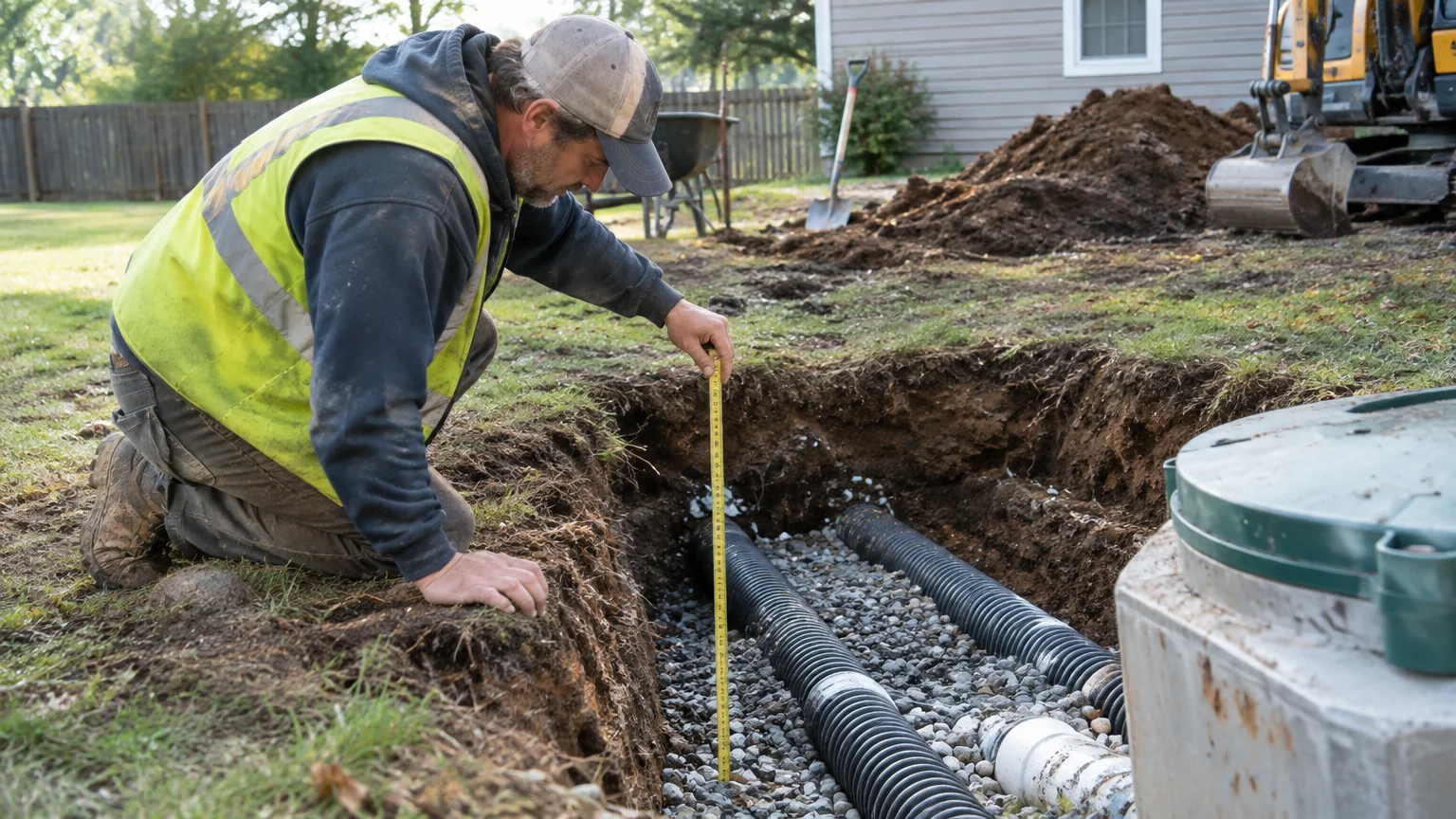
When wastewater cannot move through the soil, it may collect near the surface or move back toward the tank. Toilets and sinks may drain slowly. Wet ground or sewage odors may appear near the field or distribution box.
A failing field may show greener grass, standing water, or soft ground. These signs can be serious when wastewater is visible. Keep people and pets away and seek help instead of covering the spot with soil.
A blockage in the home line can look like a field failure. A full tank, broken outlet baffle, damaged distribution box, or failed pump can cause similar signs. A full inspection helps separate these problems.
How pumping and maintenance relate to drain field health
Regular septic tank pumping removes settled solids before they can leave the tank. The right schedule depends on tank size, household use, solids, and local guidance. Pumping protects the field, but it cannot repair a field that has already failed.
Homeowners can help by fixing leaks, spreading laundry through the week, and keeping grease out of drains. Keep vehicles, sheds, and deep-rooted plants off the field. Direct roof water and sump pump water away from it.
Pumping does not make a field accept unlimited water. It also does not replace an inspection when sewage surfaces or drains slow. Good care treats the tank, field, plumbing, and soil as one system.
How should you verify a drain field’s depth and condition?
Verify drain field depth through records, safe surface checks, and a qualified inspection when needed. The goal is to confirm the location, design, soil, and signs of stress without damaging buried parts.
Useful information includes the original permit, repair history, pumping records, site sketch, tank location, and known property changes. Photos of wet spots or other signs can also help when conditions change.
What a property owner can document before an inspection
A short written record can make an inspection more useful. Note when slow drains began, where odors appear, how often wet spots form, and whether rain changes the yard. Also mark buildings, wells, driveways, fences, and planned projects.
Useful items include:
- Septic permits, plans, and inspection reports.
- Tank pumping dates and known repair work.
- Locations of lids, cleanouts, risers, and wet areas.
- Recent landscaping, grading, construction, or irrigation changes.
- Household changes that may increase wastewater use.
- Photos from several angles during dry and wet weather.
Do not open a septic tank alone or enter any tank. Septic tanks can contain harmful gases and unsafe conditions. Surface notes and photos are usually enough to begin a professional review.
When to contact a septic professional or local authority
Professional help is useful when the field cannot be found, the depth is unclear, wastewater surfaces, a pump alarm sounds, or planned work may cross the field. The local authority may be needed for records, design approval, repairs, or a failed-system review.
Ask what will be checked and which records are needed. An inspection may include the tank, outlet, distribution box, field surface, pump equipment, soil, and nearby water flow. The exact work depends on the concern.
Septic Tank Service Dallas can help property owners review septic system concerns. Contact us to discuss the drain field’s location, depth, and condition before repair or property work.
Frequently Asked Questions
Is a leach field the same as a drain field?
Yes. Leach field and drain field are common names for the soil treatment area of a septic system. Some people spell it leech field, but they often mean the same septic feature. An approved plan may call it a soil absorption field.
Can a homeowner dig to find a drain field?
A homeowner can review records and inspect surface clues. Blind digging is risky because it may damage pipes, utilities, tanks, or treatment soil. Careful locating is safer before construction, planting, grading, or driveway work.
How deep should a septic tank be compared with its drain field?
A septic tank and drain field can sit at different depths and elevations. The tank needs enough cover and a safe connection to the home. The field needs suitable soil below its trenches. The approved site plan is the best way to compare them.
Who can perform a perc test?
A perc test, short for percolation test, checks how quickly water moves through soil. A qualified site evaluator, soil worker, engineer, or other approved person may perform it. The local health department can say who is allowed to test your property.
How can someone locate a septic tank and drain field?
Start with permits, property records, cleanouts, tank lids, and the pipe route from the home. Landscape clues may help, but they do not confirm the layout. Professional locating is safer when records are missing or construction may damage buried parts.
Key Takeaways
- Drain field depth depends on soil, groundwater, slope, design, and local rules.
- A leach field is a soil treatment area, not just a buried wastewater pipe.
- Added fill, digging, vehicles, roots, and stormwater can harm the field.
- Records and careful locating are safer than guessing and digging.
- Pumping protects the tank and field but cannot fix every drain field problem.
Conclusion
The answer to how deep is a drain field depends on the property’s soil, water, design, and approved plan. A shallow field may work well when the soil gives wastewater enough treatment space. A deeper field may fail when it reaches groundwater, rock, or another limiting layer.
Start with permits, site plans, surface clues, and pumping records. Avoid blind digging, heavy traffic, deep-rooted plants, and extra water near the field. When the layout or condition is unclear, a qualified septic professional can help check the system safely.
Septic Tank Service Dallas helps property owners understand septic tank and drain field concerns.
If you are not sure what you are dealing with, it is worth having someone look at it before it turns into a bigger job. Get in touch with Septic Tank Service Dallas today and we will tell you where you stand.