A drain field can work for many years when the septic system is well designed, installed, and cared for. How long does a drain field last? Its life depends on soil, system size, water use, pumping, drainage, and daily care. Dallas property owners can help avoid major problems by watching for early warning signs.
Table of Contents
- How long does a drain field last?
- What signs show that a drain field is aging?
- Can homeowners maintain a drain field themselves?
- What steps help a drain field last longer?
- What can go wrong when a drain field is neglected?
- When should you call a septic professional about a drain field?
- What happens when a drain field reaches the end of its life?
- Frequently Asked Questions
How long does a drain field last?
A cared-for drain field may serve a property for decades. Still, no one lifespan fits every system. A drain field is the part of a septic system that receives liquid from the tank and lets it soak into the soil. It is also called a leach field or leech field.
The soil helps filter the liquid as it moves down. This helps protect nearby groundwater. Pipes, trenches, chambers, and soil all support this process. A drainfield for septic tank wastewater needs enough space and suitable soil to work safely.
What is a drain field and how does it work?
A septic system collects wastewater from a home or building. Solids settle in the septic tank. Liquid leaves through an outlet pipe and enters the drain field through distribution lines.
The soil accepts the liquid and helps remove many harmful materials. The field needs open spaces, good drainage, and enough room for the wastewater flow. If the soil becomes sealed, wet, packed down, or overloaded, treatment works less well.
What affects a drain field’s expected lifespan?
Many things affect how long a drain field lasts. Soil type, field size, system design, installation quality, household size, and water use all matter. A system serving too many people may wear out sooner.
Heavy vehicles can crush pipes or pack down the soil. Roof water and yard runoff can soak the field. Tree roots may enter damaged lines. Delayed septic tank pumping can let solids move toward the field. Septic Tank Service Dallas helps Dallas property owners understand conditions that may affect an existing system.
What signs show that a drain field is aging?
An aging drain field may cause changes in the yard, plumbing, or indoor air. Early signs may be small, so do not ignore slow drains, wet soil, or sewage smells. These problems do not always prove field failure, but they need attention.
Which warning signs can homeowners notice first?
Homeowners may notice one or more of these changes:
- Soggy soil or standing water over the field
- Grass that grows faster or looks greener in one spot
- Sewage smells near the tank, field, or plumbing fixtures
- Slow drains or toilets that flush poorly
- Sewage backing up inside the home
- Gurgling sounds from sinks, tubs, or toilets
A bright green patch may come from extra moisture and nutrients. It does not always mean the field has failed. Repeated wetness or bad smells still call for a closer look.
How can you tell normal maintenance issues from drain field failure?
A full septic tank can cause slow drains, smells, or backups. A blocked pipe can cause the same signs. A damaged baffle can also affect flow. These problems may be easier to fix than a failed field.
Drain field trouble is more likely when signs remain after the tank is pumped. It is also more likely when several warning signs appear together. Sewage in the yard is urgent. Keep people and pets away until the cause is checked.
Can homeowners maintain a drain field themselves?
Yes. Homeowners can do simple checks and safe daily upkeep. They should not dig into the field, open buried parts, or change pipes without training. Septic tanks and drain fields may contain dangerous gases and harmful wastewater.
Which routine maintenance tasks are safe for property owners?
Safe upkeep starts with watching water use and protecting the field. Keep a simple record of tank pumping and inspection dates. Check for new smells, wet spots, and slow drains.
Keep vehicles off the field and direct roof water away from it. Make sure downspouts do not drain over the system. Grass is usually a good cover because it helps limit soil loss. Keep deep-rooted trees and large shrubs away from buried septic parts.
Spread laundry loads across the week. Repair leaking toilets and faucets quickly. Even a small leak can send a steady stream into the system and add stress over time.
When should a homeowner avoid digging, repairs, or system changes?
Avoid digging when the tank, lines, or field location is unknown. Septic covers may be buried, and digging can damage pipes or cause a fall. Have buried parts located before any digging begins.
Do not add chemicals to make a weak field work again. Do not drive equipment over the area. Do not put a pool, shed, patio, or pavement over it. Septic Tank Service Dallas can explain which checks homeowners can do and which work needs a trained professional.
What steps help a drain field last longer?
The best protection is steady and moderate use. A drain field works better when wastewater enters at a manageable rate and the soil stays open. Good care also protects the field from extra water and physical damage.
How should septic wastewater use be managed?
Fix plumbing leaks and avoid sending needless water into the system. High-flow fixtures, long showers, and several laundry loads at once can create heavy demand. Spacing water use gives the tank and field more time to handle wastewater.
Only suitable wastewater should enter household drains. Keep grease, paint, solvents, harsh chemicals, and many cleaning products out of the system. Toilets should receive human waste and toilet paper only. Put wipes, paper towels, and hygiene products in the trash unless local guidance says otherwise.
How do pumping, inspections, landscaping, and drainage protect the field?
Regular septic pumping removes solids before they reach the outlet and drainfield. The right schedule depends on tank size, household use, solids levels, and local rules. An inspection can find problems before wastewater reaches the yard.
Keep the field covered with suitable grass or shallow-rooted plants. Keep heavy traffic, livestock, and structures away. Surface water should flow away from the field instead of collecting above it.
A perc test, short for percolation test, measures how quickly soil absorbs water. A qualified local professional or public health office may perform or oversee one. A perc test is often needed for a new system or major replacement. It does not replace an inspection of an existing field.
What can go wrong when a drain field is neglected?
Neglect can reduce the soil’s ability to accept wastewater. Solids may leave an overloaded tank and clog soil spaces. Extra water can saturate the field, while vehicles can press the soil together and limit air movement.
How do excess water, soil compaction, and root growth cause damage?
A drain field needs room for wastewater to spread through the soil. Roof runoff, sump pump discharge, or poor grading can add water from outside the septic system. This leaves less room for household wastewater.
Packed soil has fewer open spaces. Trucks, tractors, and parked vehicles can harm the field even when the surface looks normal. Roots can also interfere with pipes or chambers, especially when trees grow too close.
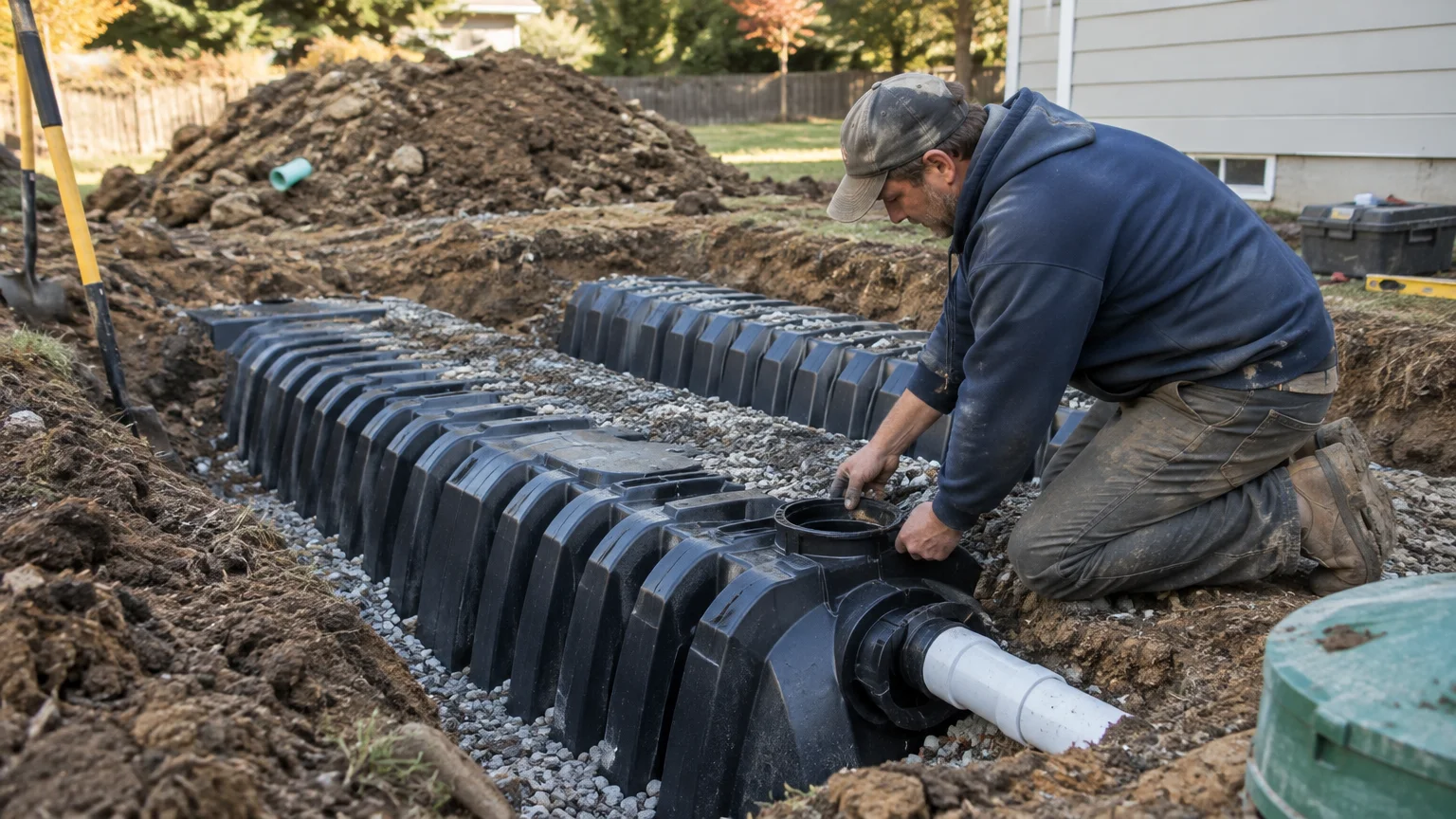
A drain field chamber is a structure that holds and spreads wastewater below ground. Chambers provide open space around the distribution area, but they still need suitable soil and proper care. A chamber cannot fix an overloaded or poorly drained site by itself.
Can improper septic tank pumping or repairs shorten the system’s life?
Yes. Pumping that is delayed or incomplete can leave solids in the tank. Work done without checking the tank may miss hidden problems. Poor repairs can cause leaks, uneven flow, or damage to pipes and lids.
Adding unapproved chemicals or biological products is not a safe replacement for pumping and inspection. When a problem starts, guessing can make repairs harder. A professional check can tell whether the cause is the tank, plumbing, or drain field.
When should you call a septic professional about a drain field?
A septic professional should inspect the system when wastewater surfaces, sewage smells continue, or indoor backups occur. Prompt help matters when children, pets, or nearby water sources could contact wastewater. Waiting may let a small fault affect more of the field.
Which symptoms require prompt inspection?
Seek help for sewage in the yard, repeated backups, or toilets that stop working. Act when several drains slow down at once. A wet area that returns after dry weather is another strong warning sign.
Before service arrives, limit water use. Stay away from visible wastewater and do not dig. Photos of wet spots, smells, and plumbing symptoms can help explain what changed.
What should an inspection or drain field evaluation include?
An evaluation may include checking the tank level, inlet and outlet baffles, lids, distribution box, pipes, soil, and signs of wastewater on the surface. The professional may also review past pumping, repairs, water use, and the property layout.
The check should show whether the issue comes from the tank, plumbing, drainage, or field. It may show whether a repair, added treatment, or replacement review is needed. Local rules can affect which work is allowed and what approvals are required.
What happens when a drain field reaches the end of its life?
A failed drain field cannot treat wastewater as designed. Some fields need a focused repair. Others need a new field or a larger system change. The right answer depends on the cause, soil, layout, permits, and available space.
Can a failing drain field be repaired or does it need replacement?
A professional may repair a broken pipe, damaged distribution box, blocked outlet, or drainage problem. These repairs may restore function when the soil still works. A field with lasting saturation, severe clogging, or major soil failure may need replacement.
Do not assume pumping alone fixes a failed field. Pumping can lower the tank level, but it does not restore damaged soil. A proper evaluation should explain the problem and possible next steps before work begins.
How can property owners plan for long-term septic system care?
Keep records of pumping, inspections, repairs, permits, and system locations. These records help future owners, tenants, and service professionals understand the property. They also help with planning when a home is sold or expanded.
New owners should ask where the tank and field are located. They can also ask what the system serves and whether past records exist. A septic tank is a buried container that separates solids, liquids, and scum from household wastewater. Knowing the parts makes warning signs easier to understand.
Frequently Asked Questions
How deep should a septic tank be?
A septic tank should be buried deep enough to protect the tank and pipes. The correct depth depends on tank design, soil, frost, and local rules. Covers should stay easy to reach for inspection and pumping. A professional should locate buried parts instead of guessing or digging blindly.
What is a septic system?
A septic system treats household wastewater on the property. It usually includes a septic tank, outlet pipe, distribution parts, and a drain field. The tank settles solids, and the drain field releases liquid into suitable soil. Good design, careful water use, and regular care help the system work safely.
Who performs a perc test?
A qualified soil professional, septic designer, engineer, or approved local office may perform or oversee a perc test. The exact rule depends on the location and project. Check with the local health department before planning a new system, addition, or field replacement.
How do you spell cesspool?
The standard spelling is cesspool. A cesspool is usually a covered pit that receives wastewater without the same treatment and soil distribution used by a modern septic system. Use the correct system name when reviewing records or asking a professional about the property.
How can someone locate a septic tank?
A septic tank may be found through property records, installation drawings, inspection records, or the plumbing layout. A trained professional can also locate it carefully. The tank may sit several feet from the home, but each property is different. Digging without a plan can damage pipes or create a safety risk.
Key Takeaways
- A drain field’s life depends on soil, design, water use, and care.
- Leach field and leech field are common names for the same area.
- Wet spots, smells, slow drains, and backups need prompt attention.
- Homeowners can manage water use and protect the field without digging.
- Pumping and inspections help prevent solids and hidden faults from reaching the field.
Conclusion
A drain field can last many years when water use stays reasonable and the system receives proper care. Protect the field from vehicles, runoff, roots, and construction. Respond quickly to smells, wet ground, slow drains, and backups.
Septic Tank Service Dallas helps property owners understand septic tank pumping and drain field care. The company serves Dallas and nearby communities, including areas around Downtown Dallas, Hiram, Rockmart, Braswell, and Taylorsville. Contact us to arrange help with a drain field concern or routine septic maintenance.